
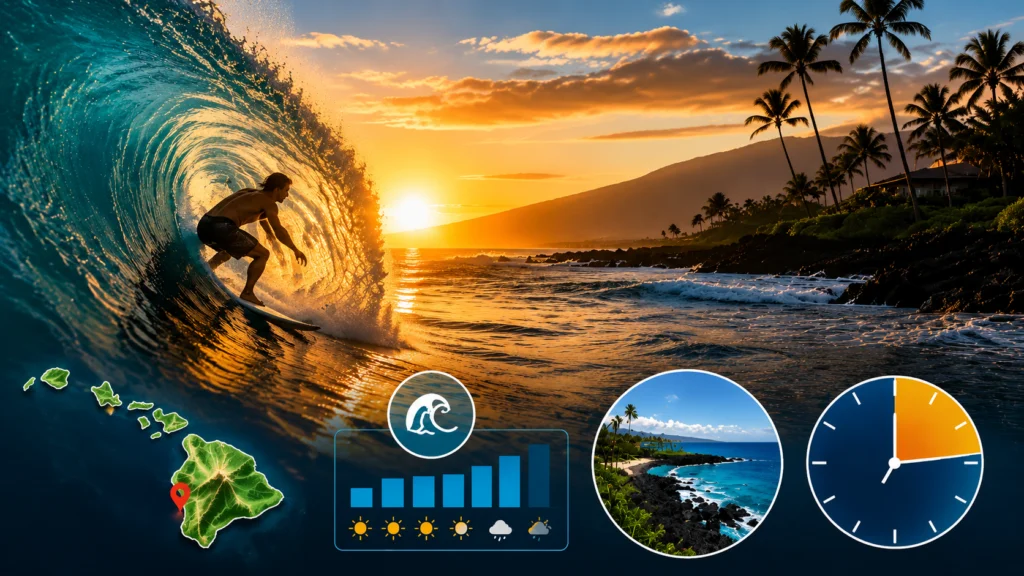
Figuring out the best time to surf in Hawaii depends heavily on which island you are visiting and what kind of waves you are looking for. Kona, on the Big Island, operates on its own schedule compared to the famous breaks on Oahu or Maui. The leeward coast picks up south swells in summer and occasional north swells in winter, creating a mix of conditions that work for surfers at almost every level.
If you are planning a trip and want the best time to take surf lessons, Kona, Big Island should be high on your list. The water stays warm year-round, the crowds are lighter than on Oahu, and the reef breaks here are more forgiving than the sharp coral elsewhere.
Kona’s Surf Seasons
Summer brings consistent south swells to the Big Island. From May through October, waves roll into Kona with predictable regularity. These swells generate the kind of mellow, rolling waves that make the best surf conditions for beginners. The water temperature peaks in the low 80s, and the offshore trade winds groom the faces into clean, rideable lines.
Winter shifts the focus northward. November through April can bring larger northwest swells that light up the more advanced breaks. For visitors seeking the best time to surf, this period offers more variety but also more challenges. Beginners should stick to the sheltered bays during bigger swell events.
Best Time to Surf in Hawaii for Beginners
Morning sessions are almost always the answer. The trade winds pick up by late morning, so dawn patrol delivers the cleanest conditions. If you are booking surf lessons in Kona, Big Island, ask for the earliest available slot. The waves are calmer, the wind has not turned onshore yet, and the energy in the water feels different.
The best time to surf in Hawaii for beginners generally falls between May and September. South swells are consistent but not overwhelming, and the weather is more predictable. That said, Kona’s microclimate means good waves can appear any month of the year.
Best Surf Conditions for Beginners
Look for waves in the two to four foot range. Anything smaller is hard to catch on a longboard. Anything bigger starts demanding skills that take time to build. The best surf conditions for beginners include gentle reef breaks with deep channels, sandy entry points, and slow-rolling whitewater for practicing pop-ups.
Kahaluu Bay is the classic example. The reef creates a soft, peeling wave that breaks in relatively deep water. Instructors can stand nearby, and the channel makes paddling back out easy. It is why so many surf lesson programs on the Big Island of Kona operate here.
Reading Kona’s Daily Conditions
Check the surf report before heading out. Swell direction matters more than height on the Big Island. A two-foot south swell at Kahaluu might be perfect, while a two-foot north swell could miss the bay entirely. Wind direction is the other key factor. Offshore winds clean up the faces. Onshore winds chop them into confusion.
Tide also plays a role. Some breaks work better at high tide when the reef is deeper. Others improve at low tide when the swell wraps differently. Local knowledge separates a good session from a frustrating one.
Conclusion
Kona does not follow the same rules as the rest of Hawaii. Its leeward location, warm water, and varied swell exposure create conditions that work for surfers nearly every month of the year. For beginners, summer mornings at Kahaluu Bay are hard to beat. For those ready to step up, winter north swells bring new challenges to the south side.
Check the reports, respect the locals, and time your sessions for dawn. If you want local insight on when and where to paddle out, Local Boys Surf Adventure runs surf lessons in Kona, Big Island, based on daily conditions rather than a fixed schedule. The right timing and the right guide make all the difference.